
Axolotl Growth Chart
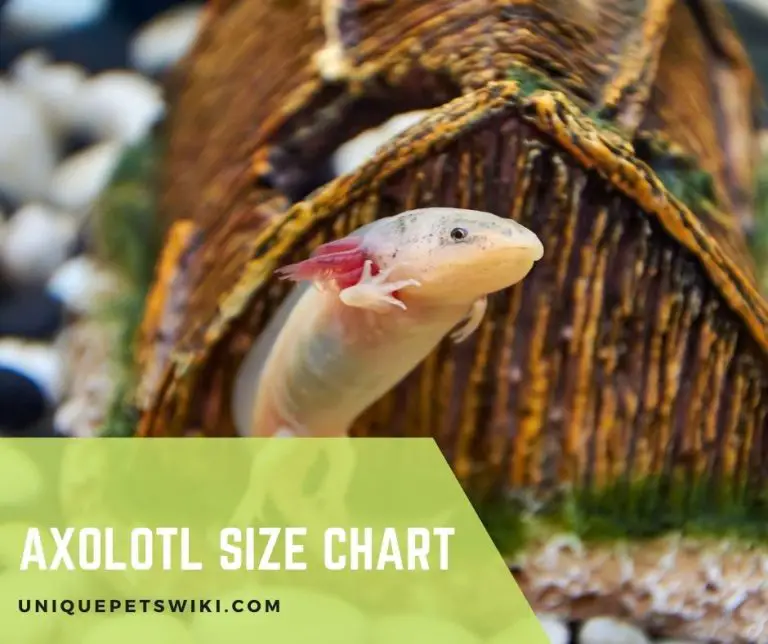
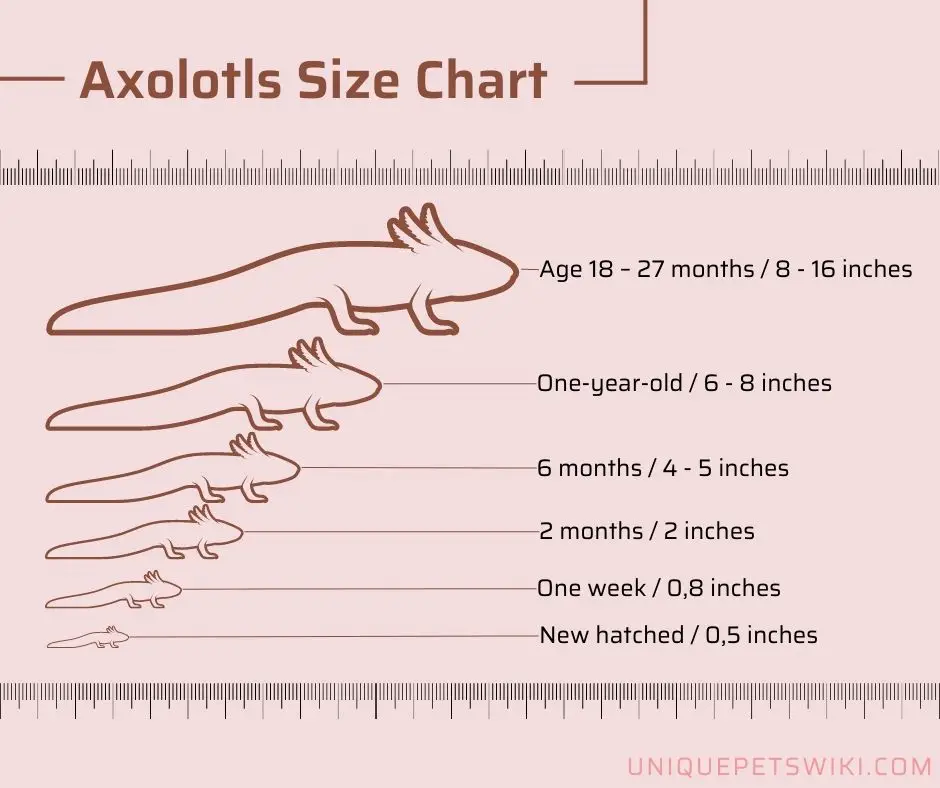
Axolotl Growth Chart - These 6 stages are named egg, embryo, larvae stage 1, larvae stage 2, young adult, full adult axolotl. On average they measure between 9 and 10 inches and weigh about 10 ounces. Web here’s how big you can expect an axolotl to get in a home aquarium: We hope this guide helps you assess whether your axolotl is growing normally. However, there are a few telltale signs that can indicate when an axolotl has reached its full size and maturity. When it comes to captivating creatures of the aquatic world, few can compare to the enigmatic axolotl. Web the axolotl (ambystoma mexicanum), also known as the water monster, is a fascinating amphibian that has captured the attention of biologists and researchers for its incredible ability to regenerate its body. Web axolotls grow at a steady pace but can vary depending on factors like habitat, diet, and genetics. Web the four main life stages of axolotls include egg, larva, juvenile, and adult. During the egg stage, axolotl fertilized eggs develop and hatch into larvae. With proper care, most pet axolotls would grow to about 9 inches or 22.9 cm in body length on average. Web contents [ show] what is the life cycle of an axolotl? This family also includes several different species of mole salamanders and giant salamanders. On the larger end, an axolotl can reach up to 15 inches. Web as an axolotl reaches the adult stage, its growth rate significantly slows down. Web on average, axolotls reach their full size at around 12 to 18 months of age, although individual growth rates can vary. But we have to start when the axolotl is still young; Egg development, larval stage, and metamorphosis. This stage is axolotl’s life cycle’s longest and most distinct. Otherwise, the baby has a 49.96% chance of adopting the same. Web determining the exact age of an axolotl can be challenging since their growth rate is influenced by several factors, including genetics, diet, water quality, and temperature. This family also includes several different species of mole salamanders and giant salamanders. Larvae are fully aquatic and have external gills for breathing. (the biggest axolotl attained a. At this stage, the axolotl. The sizes can vary, and it turns out that in some cases, we can impact the growth. Web axolotls go through three main stages in their life cycle: Web an axolotl growth chart is divided into 6 phases which observe a substantial change in the physical body of axolotl. Interestingly, females can weigh up to 180 grams (20 inches), while.. Web as an axolotl reaches the adult stage, its growth rate significantly slows down. The size of an adult axolotl can range from 6 to 18 inches, depending on factors such as genetics, diet, and overall health. During the egg stage, axolotl fertilized eggs develop and hatch into larvae. Interestingly, females can weigh up to 180 grams (20 inches), while.. Live images of a hatchling axolotl (∼3 weeks old), young juvenile (∼3 months old), late juvenile (∼5 months old), sexually mature adult (∼1 year. Web axolotls go through three main stages in their life cycle: Web one thing to note is that although they retain larval morphology, they do develop rudimentary lungs, and axolotls can be seen to occasionally rise. It includes having good water parameters, feeding them quality foods, and giving them enough space to grow. Axolotls typically achieve their maximum size (around 12 inches) within the first 18 to 24 months of their life. So, let’s dive in and discover the incredible transformation these aquatic creatures undergo as they mature into majestic adults. At this stage, the axolotl. With proper care, most pet axolotls would grow to about 9 inches or 22.9 cm in body length on average. When it comes to captivating creatures of the aquatic world, few can compare to the enigmatic axolotl. However, there are a few telltale signs that can indicate when an axolotl has reached its full size and maturity. Web the four. Web on average, axolotls reach their full size at around 12 to 18 months of age, although individual growth rates can vary. Unlike other salamanders, the axolotl does not move onto dry land once it grows up. Web axolotls grow throughout their lives, but their growth rate slows down as they age. At this stage, the axolotl has fully developed. The sizes can vary, and it turns out that in some cases, we can impact the growth. Web on average, axolotls reach their full size at around 12 to 18 months of age, although individual growth rates can vary. However, there are a few telltale signs that can indicate when an axolotl has reached its full size and maturity. When. So, let’s dive in and discover the incredible transformation these aquatic creatures undergo as they mature into majestic adults. Web an axolotl growth chart is divided into 6 phases which observe a substantial change in the physical body of axolotl. During the egg stage, axolotl fertilized eggs develop and hatch into larvae. The sizes can vary, and it turns out. Web neural control of growth and size in the axolotl limb regenerate [2] upon the completion of the developmental stages of regeneration, when the regenerative organ known as the blastema completes patterning and differentiation, the limb regenerate is proportionally small in size. During the egg stage, axolotl fertilized eggs develop and hatch into larvae. This family also includes several different. With proper care, most pet axolotls would grow to about 9 inches or 22.9 cm in body length on average. Web axolotls go through three main stages in their life cycle: As a general rule, an axolotl that is less than 6 inches long is probably less than a year old, while an axolotl that is more than 9 inches long is probably at least 2 years old. It is a unique organism because it never undergoes the complete transformation from larva to adult, a phenomenon known as neoteny. Web axolotls continue to grow after sexual maturity. Web determining the exact age of an axolotl can be challenging since their growth rate is influenced by several factors, including genetics, diet, water quality, and temperature. Axolotl’s full grown state when they are adults after 18 months to 2 years, and the axolotl growth rate depends on their food and temperature tank. Web when breeding axolotls for colors, the child has a 0.083% chance to become a blue variant, unless one of the parents is already blue. Web here’s how big you can expect an axolotl to get in a home aquarium: The sizes can vary, and it turns out that in some cases, we can impact the growth. This family also includes several different species of mole salamanders and giant salamanders. Web an axolotl growth chart is divided into 6 phases which observe a substantial change in the physical body of axolotl. So, let’s dive in and discover the incredible transformation these aquatic creatures undergo as they mature into majestic adults. Egg development, larval stage, and metamorphosis. On the larger end, an axolotl can reach up to 15 inches. At this stage, the axolotl has fully developed limbs and gills, and its body length ranges from 9 to 12 inches.
Axolotl Growth Chart
Axolotl Size Chart Tracking Growth and Development
Axolotl Growth Chart Adoptanim

Axolotl Growth Chart

axolotl growth chart Axolotl to Try Axolotl, Axolotl care, Axolotl tank

Axolotl Reproduction Mating, Developmental Stages and Metamorphosis
Axolotl Growth Chart
Axolotl Size Chart Tracking Growth and Development
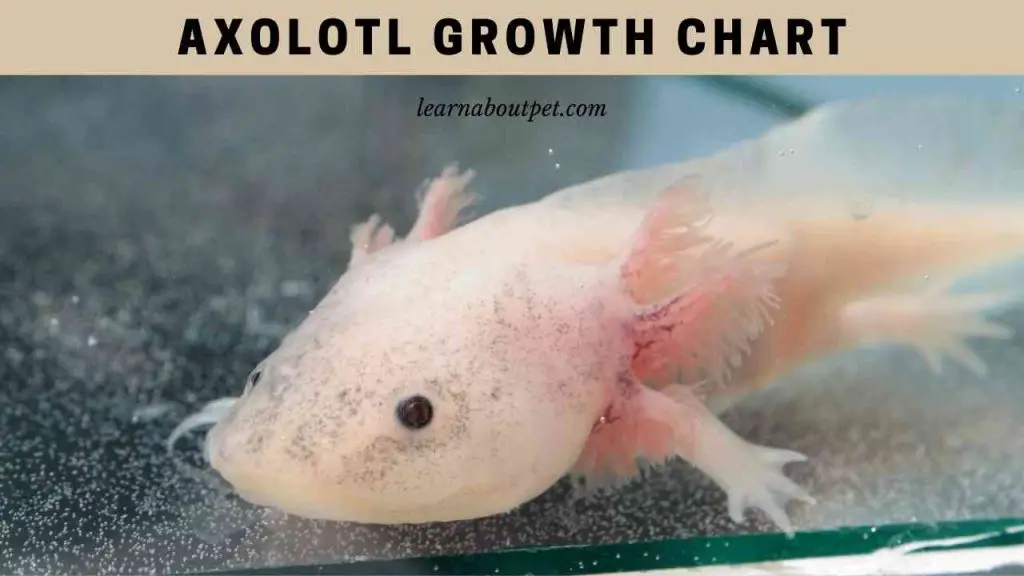
Axolotl Growth Chart

Axolotl Growth Chart
Web The Axolotl (Ambystoma Mexicanum), Also Known As The Water Monster, Is A Fascinating Amphibian That Has Captured The Attention Of Biologists And Researchers For Its Incredible Ability To Regenerate Its Body.
During The Egg Stage, Axolotl Fertilized Eggs Develop And Hatch Into Larvae.
These Remarkable Amphibians Have Captured The Hearts Of Many With Their Unique Features And Incredible Regenerative Abilities.
Interestingly, Females Can Weigh Up To 180 Grams (20 Inches), While.
Related Post: