
Corn Water Use Chart
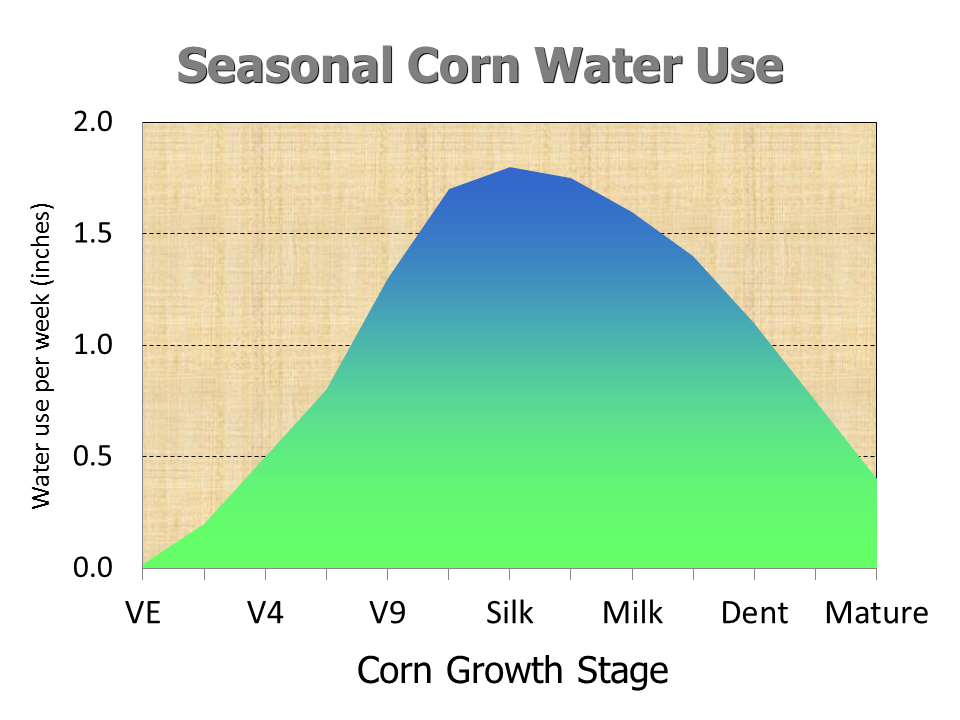
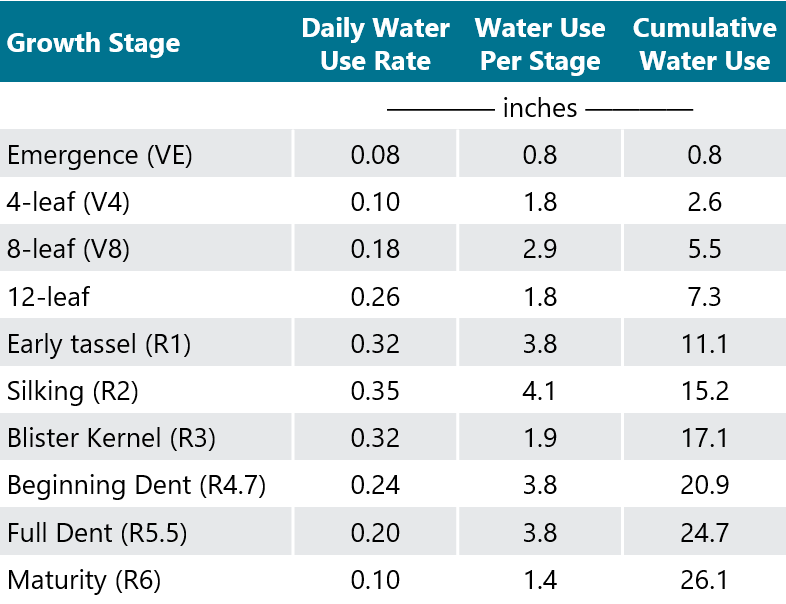
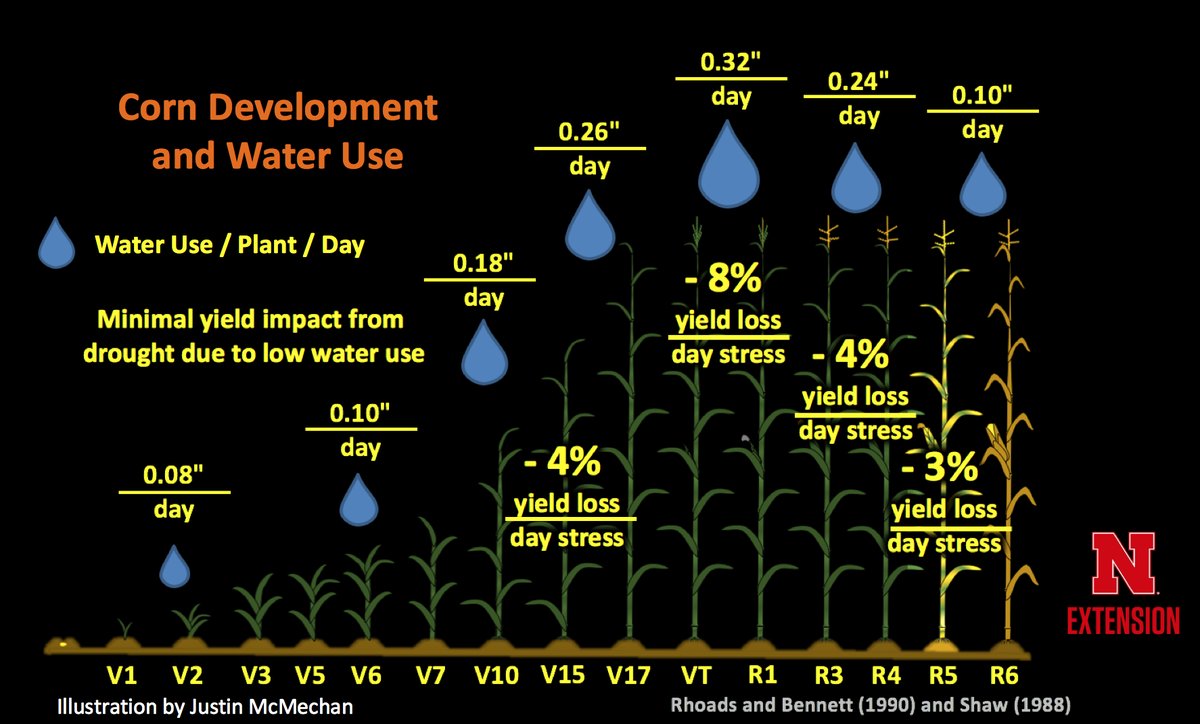
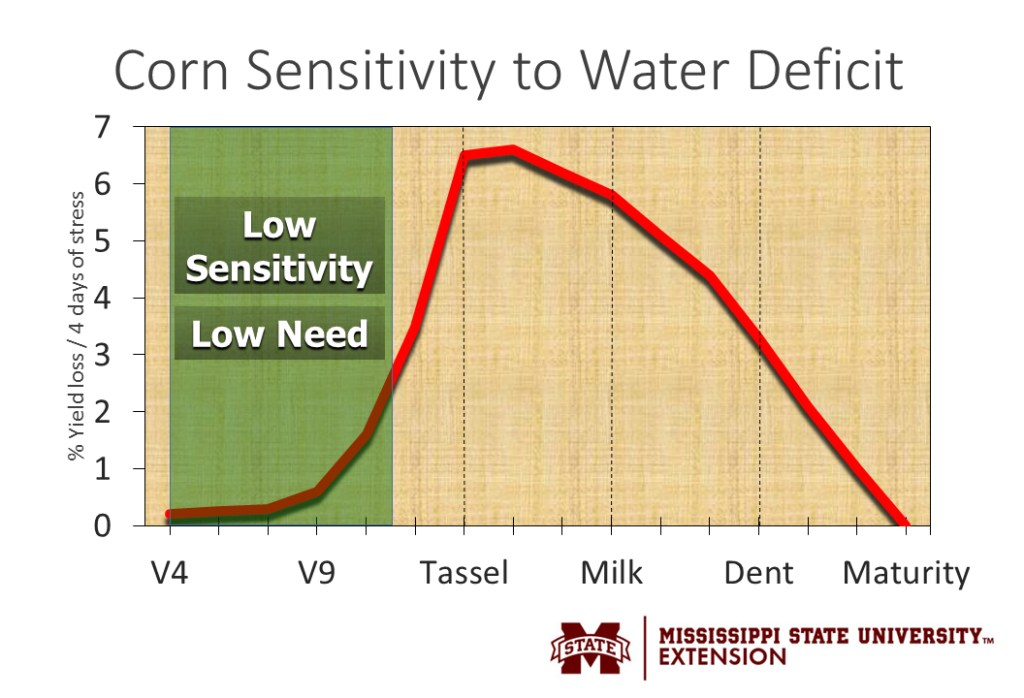
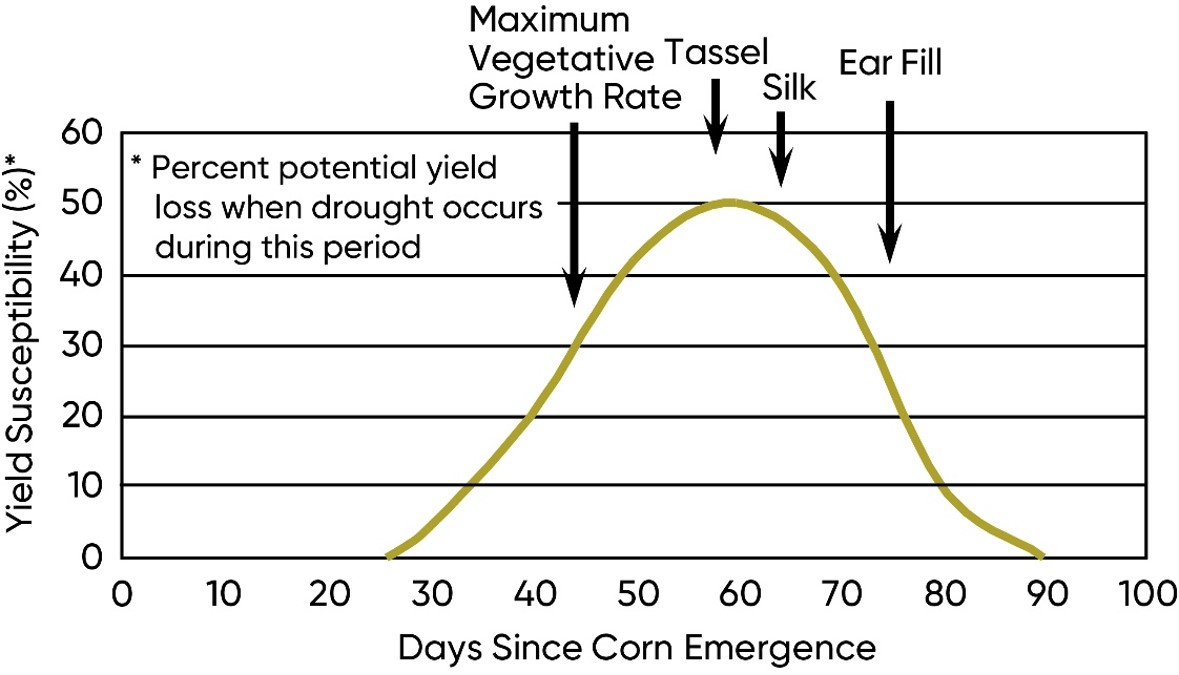
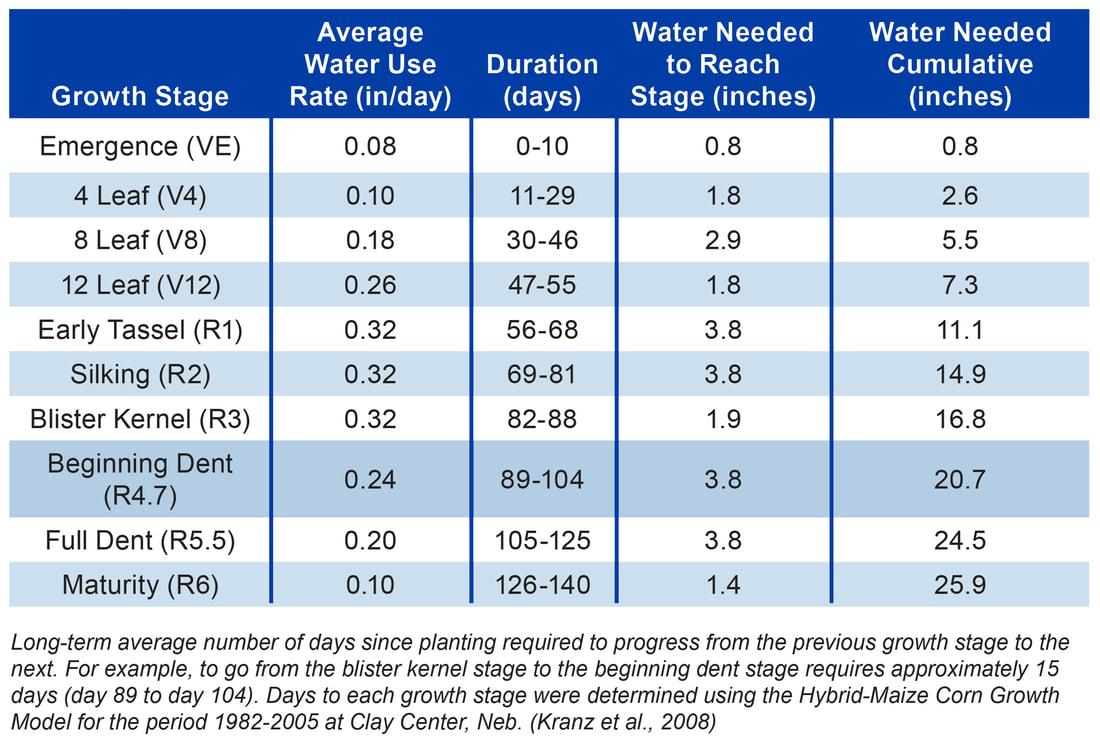
Corn Water Use Chart - Corn needs approximately one inch of water each week. Daily water use estimates can vary greatly across the state, and from year to year making average water use rates just that estimates. Web high yielding corn requires approximately 20 to 30 inches of water per year depending on planting date, maturity group, location, and weather conditions.1 corn requires the most water during the early reproductive growth stages (table 1), which are also the most sensitive stages to water stress. Web understanding corn water use and the factors that affect it can help guide more efficient irrigation applications. Web to use the chart, first identify the change in the et rate across the horizontal row and then identify the current growth stage in the left column. Web read on below to learn exactly how much water corn needs, as well as when to water and other tips. How much water does corn need? Corn water requirements change throughout the season. Web • crop water use, often referred to as evapotranspiration or et is composed of two components: • daily et increases through the vegetative growth stages, peaks around silking, and declines through grain fill. Crop water use consists of two components: Follow the two columns to the point where they intersect to identify the et rate to use in your irrigation scheduling. Web estimated corn water needs for each stage of growth can be seen in table i of the nebguide listed above. Factors that affect et and irrigation scheduling decisions include: Web to use the chart, first identify the change in the et rate across the horizontal row and then identify the current growth stage in the left column. Web this chart can be used with readings from an etgage® or other et reference. • daily et increases through the vegetative growth stages, peaks around silking, and declines through grain fill. Web high yielding corn requires approximately 20 to 30 inches of water per year depending on planting date, maturity group, location, and weather conditions.1 corn requires the most water during the early reproductive growth stages (table 1), which are also the most sensitive stages to water stress. Corn water requirements change throughout the season. Water losses from the soil (evaporation) and water losses from the crop (transpiration),. 1) soil evaporation (e) and 2) crop transpiration (t). Web • crop water use, often referred to as evapotranspiration or et is composed of two components: Water losses from the soil (evaporation) and water losses from the crop (transpiration),. Web to use the chart, first identify the change in the et rate across the horizontal row and then identify the. 1) soil evaporation (e) and 2) crop transpiration (t). First, identify the change in the et rate across the horizontal row and then identify the current growth stage in the left column. Crop water use consists of two components: Web • crop water use, often referred to as evapotranspiration or et is composed of two components: Web read on below. First, identify the change in the et rate across the horizontal row and then identify the current growth stage in the left column. Web understanding corn water use and the factors that affect it can help guide more efficient irrigation applications. Factors that affect et and irrigation scheduling decisions include: Web read on below to learn exactly how much water. Web high yielding corn requires approximately 20 to 30 inches of water per year depending on planting date, maturity group, location, and weather conditions.1 corn requires the most water during the early reproductive growth stages (table 1), which are also the most sensitive stages to water stress. Web this chart can be used with readings from an etgage® or other. How much water does corn need? Crop water use consists of two components: 1) soil evaporation (e) and 2) crop transpiration (t). Water losses from the soil (evaporation) and water losses from the crop (transpiration),. • corn is most sensitive to water deficits from flowering through grain fill. Web to use the chart, first identify the change in the et rate across the horizontal row and then identify the current growth stage in the left column. • daily et increases through the vegetative growth stages, peaks around silking, and declines through grain fill. Web • crop water use, often referred to as evapotranspiration or et is composed of. Crop water use consists of two components: • daily et increases through the vegetative growth stages, peaks around silking, and declines through grain fill. Factors that affect et and irrigation scheduling decisions include: Corn water requirements change throughout the season. Web estimated corn water needs for each stage of growth can be seen in table i of the nebguide listed. 1) soil evaporation (e) and 2) crop transpiration (t). Web high yielding corn requires approximately 20 to 30 inches of water per year depending on planting date, maturity group, location, and weather conditions.1 corn requires the most water during the early reproductive growth stages (table 1), which are also the most sensitive stages to water stress. Average daily corn water. Web estimated corn water needs for each stage of growth can be seen in table i of the nebguide listed above. Crop water use consists of two components: Corn needs approximately one inch of water each week. Web to use the chart, first identify the change in the et rate across the horizontal row and then identify the current growth. Crop water use consists of two components: Average daily corn water use (etc), water use per growth stage, and cumulative water use over the course of the growth season. • daily et increases through the vegetative growth stages, peaks around silking, and declines through grain fill. Daily water use estimates can vary greatly across the state, and from year to. Web this chart can be used with readings from an etgage® or other et reference. Water losses from the soil (evaporation) and water losses from the crop (transpiration),. Follow the two columns to the point where they intersect to identify the et rate to use in your irrigation scheduling. Crop water use consists of two components: How much water does corn need? First, identify the change in the et rate across the horizontal row and then identify the current growth stage in the left column. Average daily corn water use (etc), water use per growth stage, and cumulative water use over the course of the growth season. Corn needs approximately one inch of water each week. Web understanding corn water use and the factors that affect it can help guide more efficient irrigation applications. 1) soil evaporation (e) and 2) crop transpiration (t). • daily et increases through the vegetative growth stages, peaks around silking, and declines through grain fill. Web high yielding corn requires approximately 20 to 30 inches of water per year depending on planting date, maturity group, location, and weather conditions.1 corn requires the most water during the early reproductive growth stages (table 1), which are also the most sensitive stages to water stress. Web • crop water use, often referred to as evapotranspiration or et is composed of two components: Web to use the chart, first identify the change in the et rate across the horizontal row and then identify the current growth stage in the left column. Web estimated corn water needs for each stage of growth can be seen in table i of the nebguide listed above. • corn is most sensitive to water deficits from flowering through grain fill.
Corn Water Usage Chart
Will We Need to Irrigate Our Corn Again? Mississippi Crop Situation

Statistical characteristics of corn water use (mm), n = 29. Download

Corn Irrigation Tattnall County Extension
Corn Water Use Pioneer® Seeds
Crop Infographics CropWatch
How to Improve Corn Yield by Better Timing your First Irrigation
Corn Water Usage Chart
Corn Water Use Pioneer Canada
Corn Water Usage Chart
Daily Water Use Estimates Can Vary Greatly Across The State, And From Year To Year Making Average Water Use Rates Just That Estimates.
Corn Water Requirements Change Throughout The Season.
Web Read On Below To Learn Exactly How Much Water Corn Needs, As Well As When To Water And Other Tips.
Factors That Affect Et And Irrigation Scheduling Decisions Include:
Related Post: