
Decimal Rounding Chart
Decimal Rounding Chart - Web the common rounding method says that if the number you are rounding is followed by the number 5 or above (5,6,7,8,or 9) then you should round that number up. We previously considered the concept of rounding numbers where our concern with rounding was related to positive integers only. If it is lesser than (<) 5, we round down, and if it is equal (=) to or greater than (>) 5, then we round up. In order to round decimals with the rule: To round a number, we consider the next digit to the right; Create a number line with a scale one position smaller than the rounding number. If this number is greater than or equal to five, round up by adding one to your place value. 13) 5.439 14) 12.907 15) 26.1855 16) 48.623 17) 91.448 18) 29.354 round each decimal to the nearest. For example, you can round the number 27 to 30 because 7 is greater than 5. Web rounding decimal numbers. This is used to make calculation easier to do and results easier to understand, when exact values are not too important. Web round each decimal to the nearest whole number. In order to round decimals with the rule: 7) 22.652 8) 30.342 9) 47.847 10) 82.88 11) 16.184 12) 71.79 round each decimal to the nearest hundredth. Note whether the digit to the immediate right of the marked digit is less than 5. Web to round decimals, first find out the place you want to round to and look at the number in the place to its right. Web we round a decimal number to estimate it to its nearest whole number. 1) 23.18 2) 8.6 3) 14.45 4) 7.5 5) 3.95 6) 56.7 round each decimal to the nearest tenth. If this number is greater than or equal to five, round up by adding one to your place value. If it is lesser than (<) 5, we round down, and if it is equal (=) to or greater than (>) 5, then we round up. 1) 23.18 2) 8.6 3) 14.45 4) 7.5 5) 3.95 6) 56.7 round each decimal to the nearest tenth. To round a number, we consider the next digit to the right; Web we round a decimal number to estimate it to its nearest whole number. If this number is greater than or equal to five, round up by adding one. Web round each decimal to the nearest whole number. It involves reducing the number of significant digits while retaining the general magnitude or size of the original number. In order to round decimals with the rule: For example, you can round the number 27 to 30 because 7 is greater than 5. If this number is greater than or equal. Web we round a decimal number to estimate it to its nearest whole number. 13) 5.439 14) 12.907 15) 26.1855 16) 48.623 17) 91.448 18) 29.354 round each decimal to the nearest. 1) 23.18 2) 8.6 3) 14.45 4) 7.5 5) 3.95 6) 56.7 round each decimal to the nearest tenth. Web how to round numbers. It involves reducing the. In order to round decimals with the rule: Web round each decimal to the nearest whole number. Create a number line with a scale one position smaller than the rounding number. Count to see if the number being rounded is closer to the number rounded down or up. Web rounding decimal numbers. For example, you can round the number 27 to 30 because 7 is greater than 5. If this number is greater than or equal to five, round up by adding one to your place value. First, you'll need to remember your place values: Note whether the digit to the immediate right of the marked digit is less than 5. Web. 1) 23.18 2) 8.6 3) 14.45 4) 7.5 5) 3.95 6) 56.7 round each decimal to the nearest tenth. Count to see if the number being rounded is closer to the number rounded down or up. Decide which is the last digit to keep; If it is lesser than (<) 5, we round down, and if it is equal (=). To round a number, we consider the next digit to the right; This is used to make calculation easier to do and results easier to understand, when exact values are not too important. Count to see if the number being rounded is closer to the number rounded down or up. However, the number 24 would be rounded down to 20,. 1) 23.18 2) 8.6 3) 14.45 4) 7.5 5) 3.95 6) 56.7 round each decimal to the nearest tenth. Note whether the digit to the immediate right of the marked digit is less than 5. Leave it the same if the next digit is less than 5 (this is called rounding down) but increase it by 1 if the next. We previously considered the concept of rounding numbers where our concern with rounding was related to positive integers only. This is used to make calculation easier to do and results easier to understand, when exact values are not too important. It involves reducing the number of significant digits while retaining the general magnitude or size of the original number. Web. To round a number, we consider the next digit to the right; Web round each decimal to the nearest whole number. If it is lesser than (<) 5, we round down, and if it is equal (=) to or greater than (>) 5, then we round up. Leave it the same if the next digit is less than 5 (this. To round a number, we consider the next digit to the right; Web we round a decimal number to estimate it to its nearest whole number. Web rounding decimal numbers. Web to round a decimal to a particular position: The result of rounding is less accurate than the original number but simplifies calculations. However, the number 24 would be rounded down to 20, because 4 is less than 5. Web in order to round decimals with a number line: Web round each decimal to the nearest whole number. For example, you can round the number 27 to 30 because 7 is greater than 5. If it’s less than five, round down by. This is used to make calculation easier to do and results easier to understand, when exact values are not too important. It involves reducing the number of significant digits while retaining the general magnitude or size of the original number. Leave it the same if the next digit is less than 5 (this is called rounding down) but increase it by 1 if the next digit is 5 or more (this is called rounding up) 1) 23.18 2) 8.6 3) 14.45 4) 7.5 5) 3.95 6) 56.7 round each decimal to the nearest tenth. Web the common rounding method says that if the number you are rounding is followed by the number 5 or above (5,6,7,8,or 9) then you should round that number up. Count to see if the number being rounded is closer to the number rounded down or up.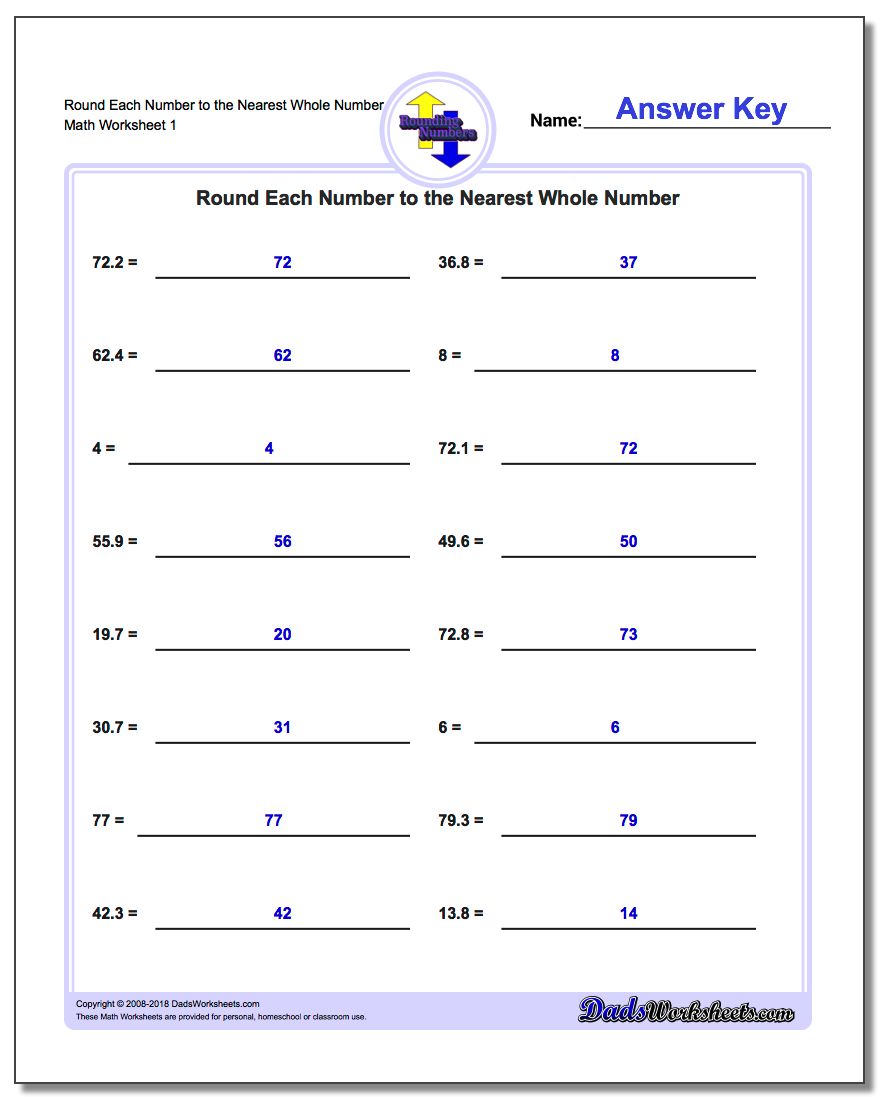
Simple Rounding With Decimals
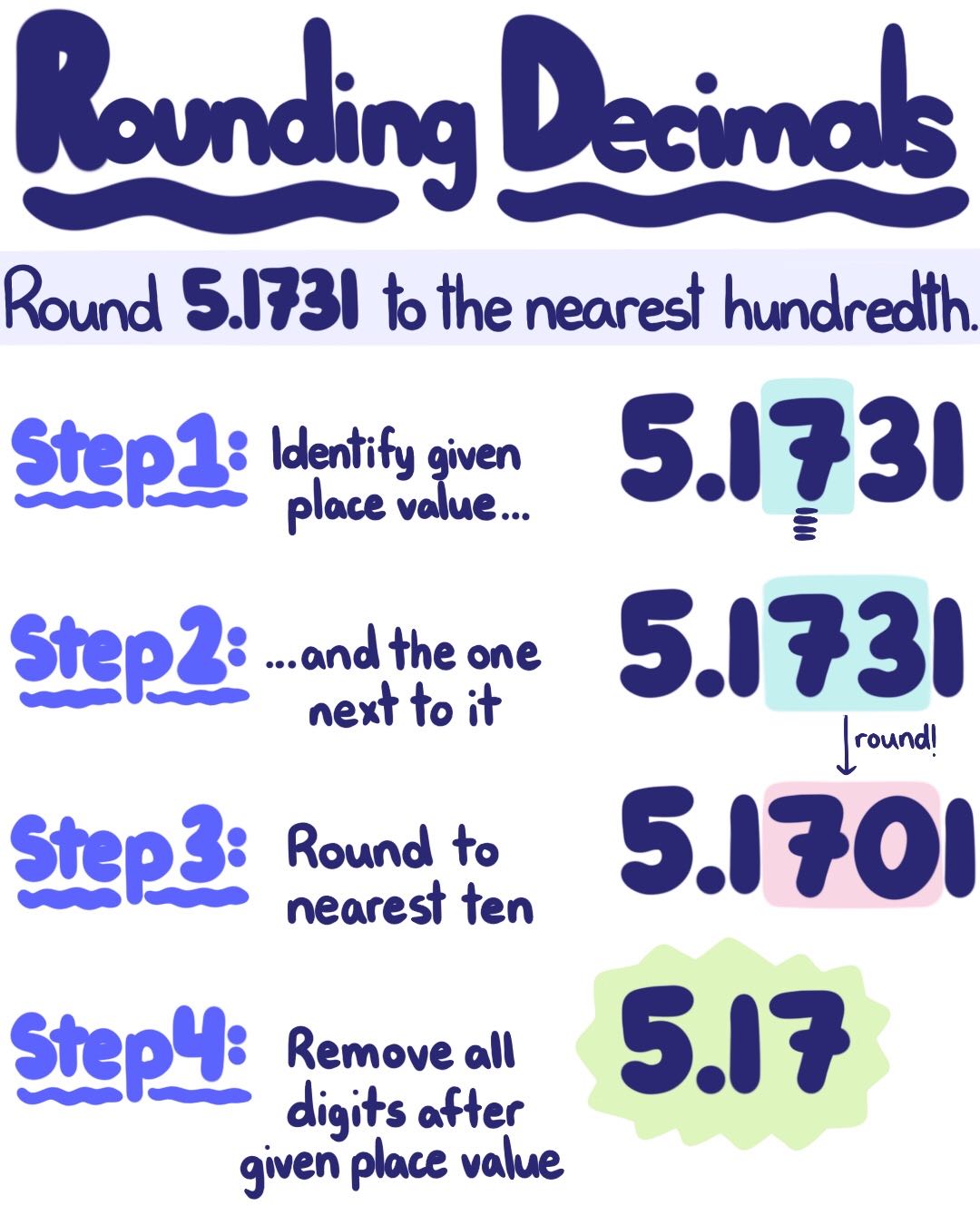
Two Decimal Points

Decimal Concepts Unit {with Interactive Notes} Decimal, Charts and
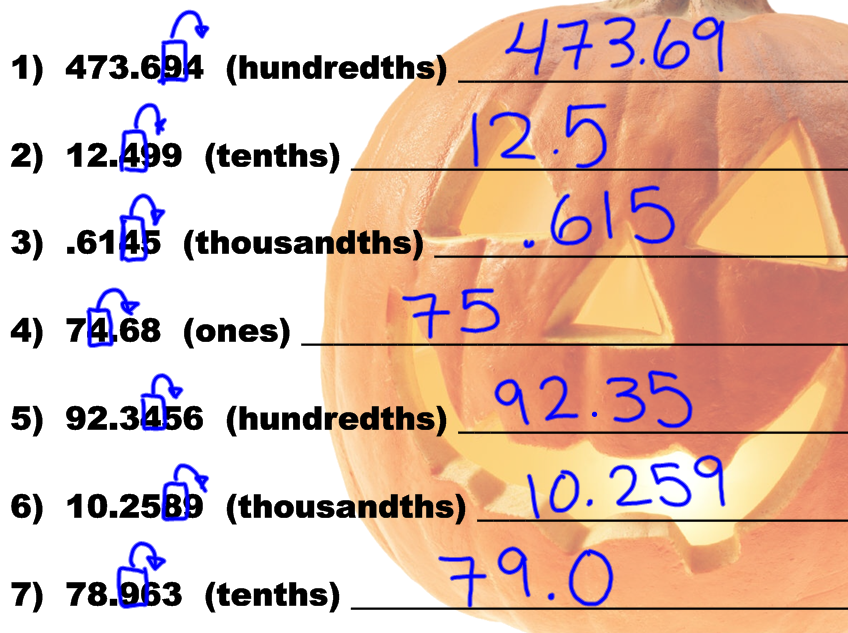
5.11 Rounding Decimals holly hills 5th grade
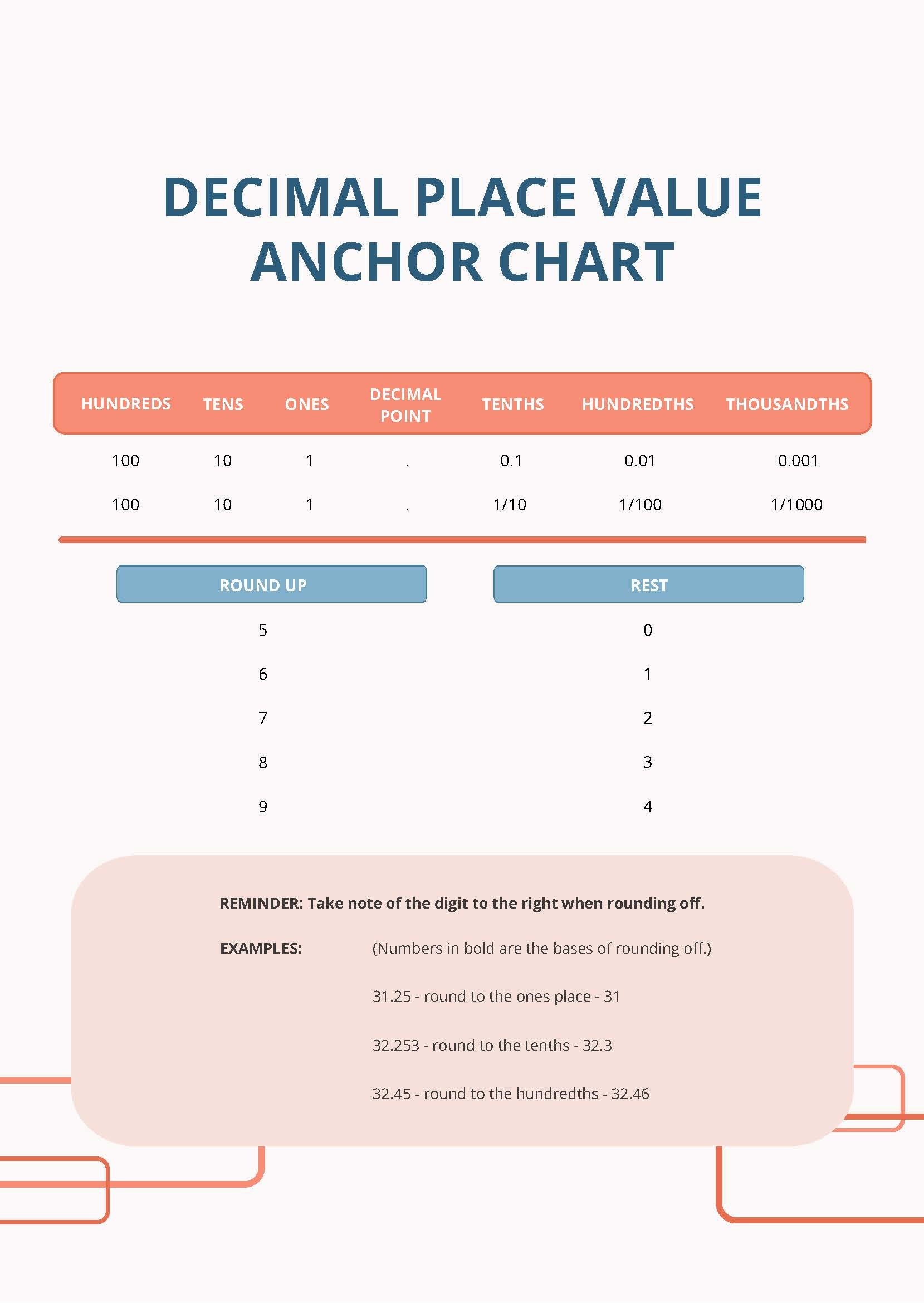
Rounding Decimal Place Value Chart in PDF Download

Rounding Decimals On A Number Line Anchor Chart Examples and Forms
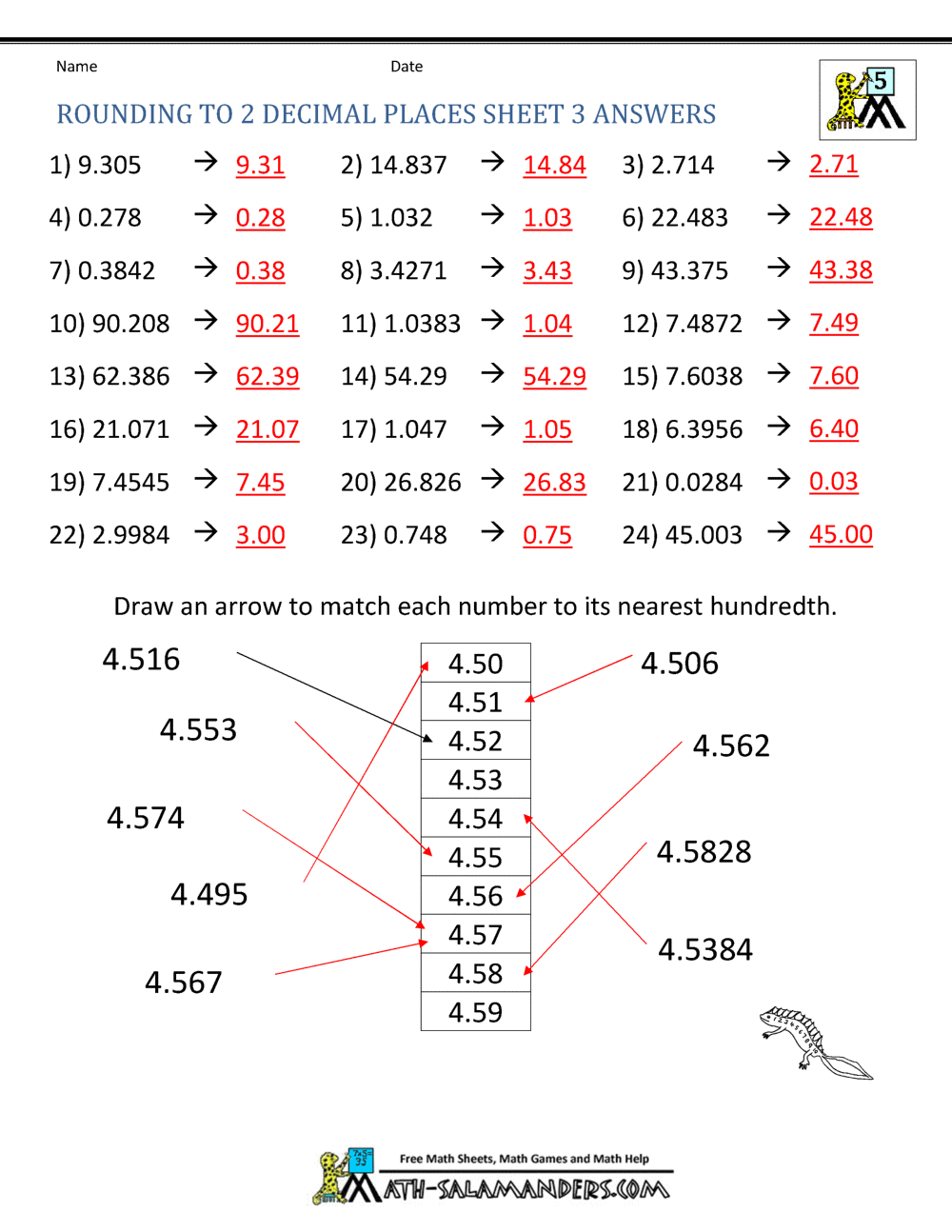
Rounding Decimal Places Rounding numbers to 2dp
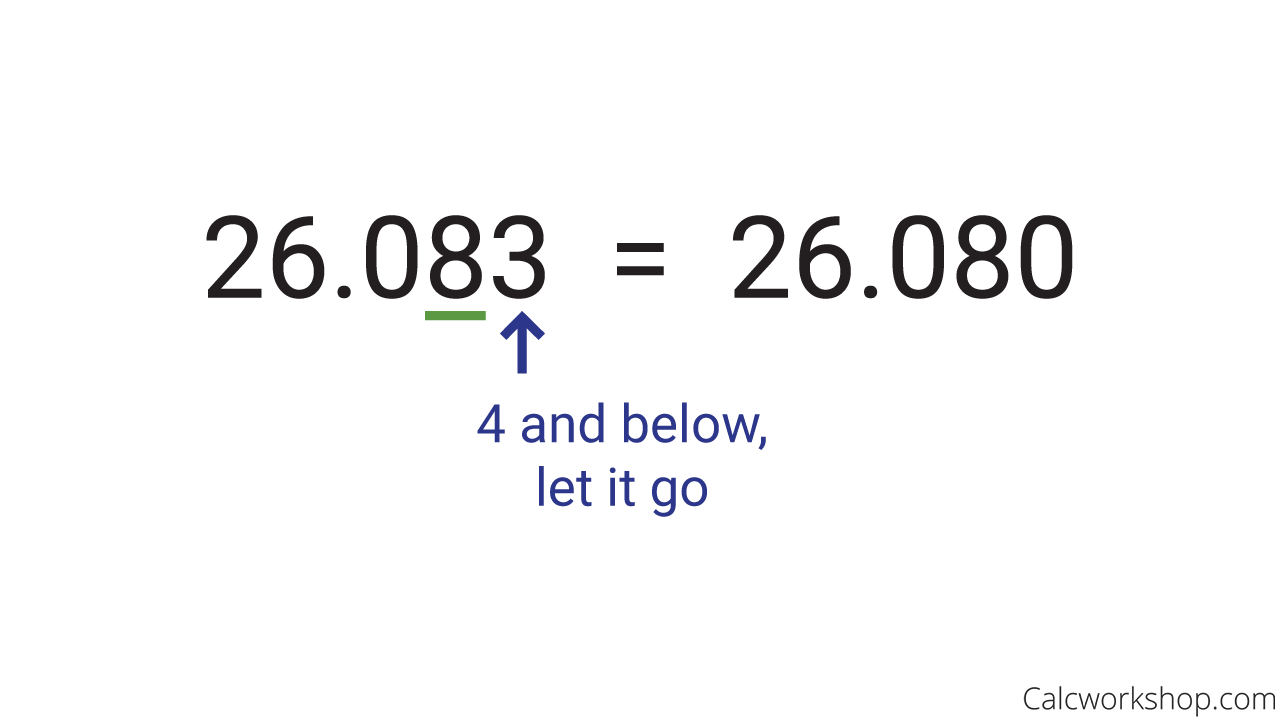
Rounding Decimals (Simple HowTo w/ 27 Examples!)
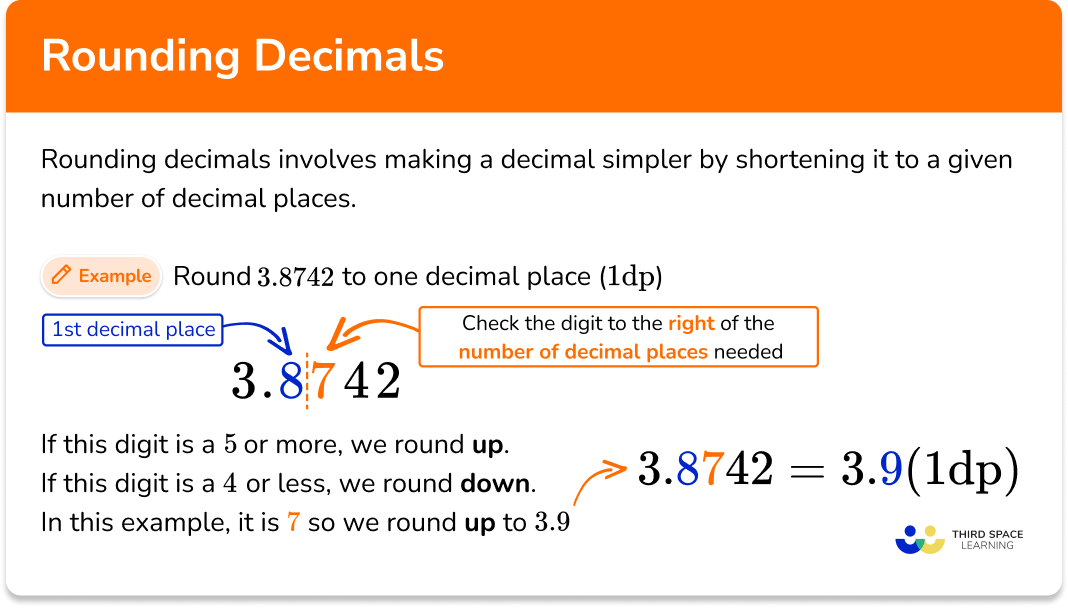
Rounding Decimals GCSE Maths Steps, Examples & Worksheet

Rounding Numbers Rules, Examples for Rounding Numbers
Create A Number Line With A Scale One Position Smaller Than The Rounding Number.
We Can Round Decimals To A Certain Accuracy Or Number Of Decimal Places.
13) 5.439 14) 12.907 15) 26.1855 16) 48.623 17) 91.448 18) 29.354 Round Each Decimal To The Nearest.
7) 22.652 8) 30.342 9) 47.847 10) 82.88 11) 16.184 12) 71.79 Round Each Decimal To The Nearest Hundredth.
Related Post: