
Mold Growth Humidity Chart
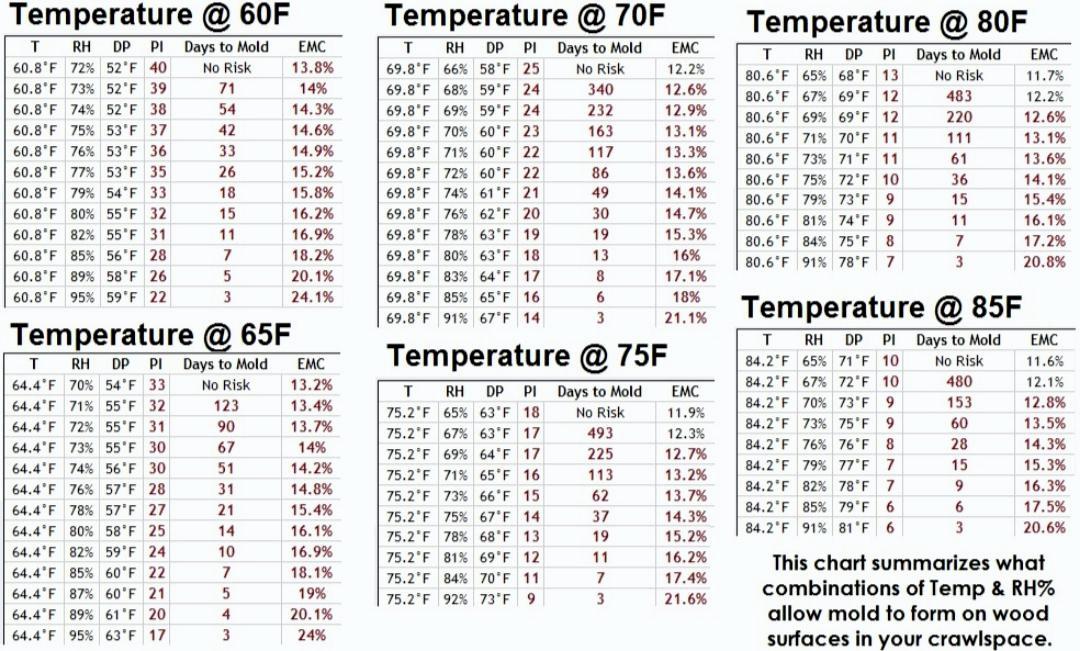
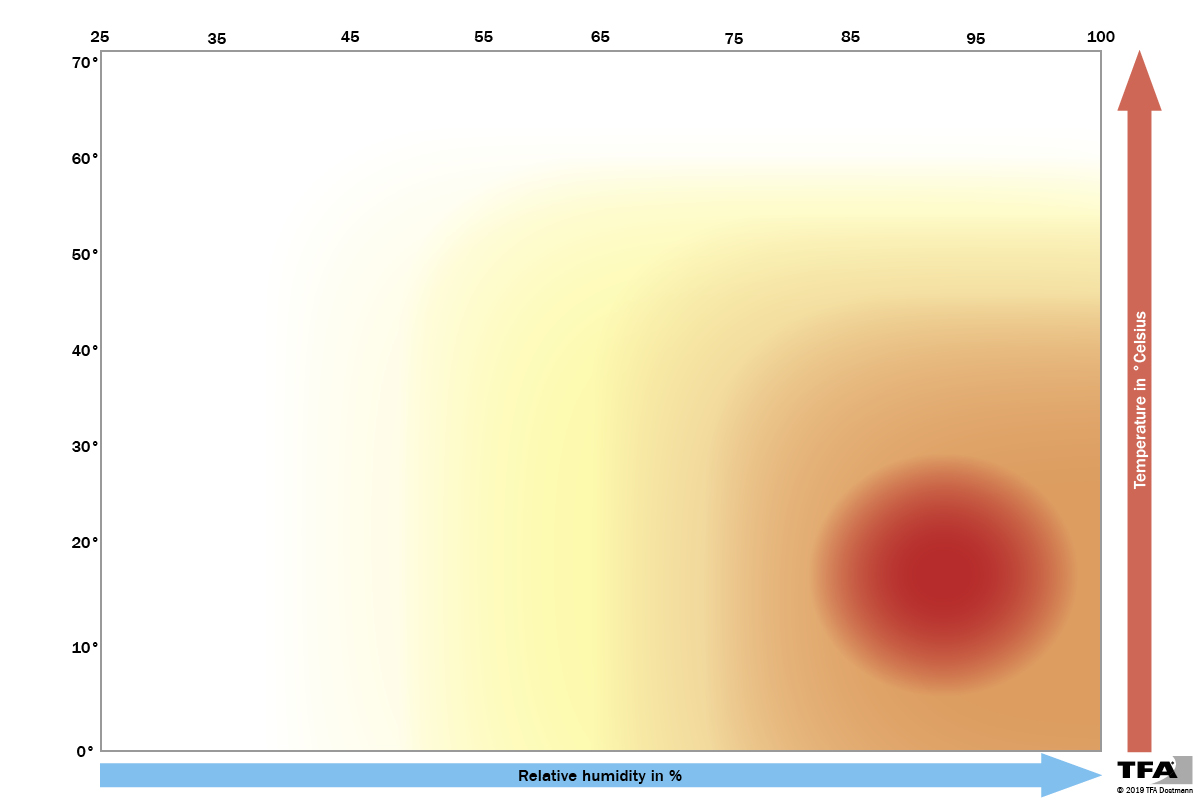
Mold Growth Humidity Chart - Mildew on kitchen or bathroom surfaces. Web mold needs 55% or higher humidity in order to grow. Elevated relative humidity can also lead directly to condensation. Storage temperature and humidity recommendations vary by vegetable crop and following the right guidelines is important for maximizing shelf life. Web high humidity levels can contribute to the growth of mold in your home. Humidity below 30% is too dry and can make you feel sick. The first step in any mold investigation is to determine the source of the mold. Web at what humidity does mold grow? Web what humidity does mold grow? Web is your mold growth due to humidity problems? This is common in bathrooms and kitchens, which generate humidity when you use them. With this in mind, it's important to find out how to check the humidity level in. Low humidity may also discourage pests (such as cockroaches) and dust mites. Mold grows fastest between 77°f and 86°f with relative humidity above 55%. When humidity levels are high, there is more moisture in the air and on surfaces, providing the ideal conditions for mold to develop. Web the key to mold control is moisture control. Humidity mold can be controlled in your home through proper ventilation, which can reduce the likelihood of mold presence, and using a dehumidifier. When humid air is in contact with a cold surface, it can create moisture or condensation. Condensation on windows, walls, and around plumbing. When a spore germinates, it produces hyphae or branches that digest. Low humidity may also discourage pests (such as cockroaches) and dust mites. This means that in the given example, mold can start to grow at a surface temperature of 12.6 °c or less on walls, especially in corners and niches. Winter squash curing & storage chart, johnnys selected seeds. Relative humidity and the factors that govern it are often. Web. Winter squash curing & storage chart, johnnys selected seeds. Web the key to mold control is moisture control. Humidity mold can be controlled in your home through proper ventilation, which can reduce the likelihood of mold presence, and using a dehumidifier. When indoor air is humid, it means there is a high amount of water vapor, which can lead to. Humidity mold can be controlled in your home through proper ventilation, which can reduce the likelihood of mold presence, and using a dehumidifier. Humidity below 30% is too dry and can make you feel sick. While overall humidity conditions in your home may be 55% or lower, it may be higher in select areas. Web we know today that mold. Low humidity may also discourage pests (such as cockroaches) and dust mites. While overall humidity conditions in your home may be 55% or lower, it may be higher in select areas. Web by understanding how to measure humidity, utilizing dehumidifiers or humidifiers when necessary, and addressing common questions related to the humidity chart, you can effectively manage humidity levels and. Condensation on windows, walls, and around plumbing. Storage temperature and humidity recommendations vary by vegetable crop and following the right guidelines is important for maximizing shelf life. High indoor humidity (and resulting mold growth) often means your hvac system is inefficient. Web mold needs 55% or higher humidity in order to grow. With this in mind, it's important to find. Web one might ask, “ at what humidity does mold grow?” molds thrive in damp conditions, and they can destroy your home, belongings, and even be the source of several health problems. If possible, keep indoor humidity below 60 percent (ideally between 30 and 50 percent) relative humidity. This range is optimal for preventing mold growth. The first step in. Web at what humidity does mold grow? Relative humidity and the factors that govern it are often. Elevated relative humidity can also lead directly to condensation. Web we know today that mold can already start to grow at a room humidity of 80 %. Humidity mold can be controlled in your home through proper ventilation, which can reduce the likelihood. Web one might ask, “ at what humidity does mold grow?” molds thrive in damp conditions, and they can destroy your home, belongings, and even be the source of several health problems. However, mold can still grow at lower temperatures and indoor humidity levels; Mold growth does not require the presence of standing water; This range is optimal for preventing. When humidity levels are high, there is more moisture in the air and on surfaces, providing the ideal conditions for mold to develop. It just grows more slowly. Humidity below 30% is too dry and can make you feel sick. If possible, keep indoor humidity below 60 percent (ideally between 30 and 50 percent) relative humidity. When a spore germinates,. Molds can be avoided, especially if you take careful attention of your home, and make sure it has no place to thrive. The most important distinction is whether it’s due to humidity or a liquid water intrusion such as a leak. When humid air is in contact with a cold surface, it can create moisture or condensation. Web sometimes, humidity. Web · dark mold growth · shriveling of bulb. Web the key to mold control is moisture control. However, mold can still grow at lower temperatures and indoor humidity levels; Storage temperature and humidity recommendations vary by vegetable crop and following the right guidelines is important for maximizing shelf life. Web this guide provides information and guidance for homeowners and renters on how to clean up residential mold problems and how to prevent mold growth. Web sometimes, humidity or dampness (water vapor) in the air can supply enough moisture for mold growth. While overall humidity conditions in your home may be 55% or lower, it may be higher in select areas. Web we know all about how mold grows, what mold needs to grow, what temperature and humidity level mold grows at, and how to prevent mold growth in your home or office. Humidity mold can be controlled in your home through proper ventilation, which can reduce the likelihood of mold presence, and using a dehumidifier. Stetten home services tells our clients to text us a picture of their monitor when the humidity eclipses 72% rh in the crawlspace. The most important distinction is whether it’s due to humidity or a liquid water intrusion such as a leak. What temperature and humidity does mold grow at? Web by understanding how to measure humidity, utilizing dehumidifiers or humidifiers when necessary, and addressing common questions related to the humidity chart, you can effectively manage humidity levels and minimize the risk of. Condensation on windows, walls, and around plumbing. It just grows more slowly. Web indicators of high indoor humidity include:
Winter Grow Conditions In My Tent..... Are they good enough? Inquiring

Humidity, Temperature, Dewpoint, CO2, and Mold by bluSensor Medium

Mold Temperature Humidity Chart, HD Png Download vhv

Humidity & Mold Growth Environix
Mold Growth FSEC®
Mold Chart for Temperature and Humidity Monitors Scrolller
Tips for preventing mould in homes TFA Dostmann
Air Psychrometric Chart
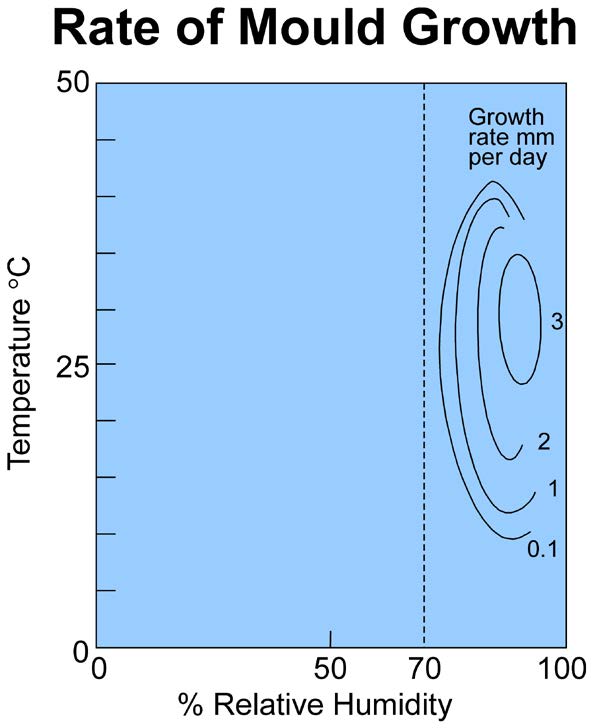
Bulk material handling Munters

Understanding Moisture Damage
It Can Occur When High Relative Humidity Or The Hygroscopic Properties (The Tendency To Absorb And Retain Moisture) Of Building Surfaces Allow Sufficient Moisture To Accumulate.
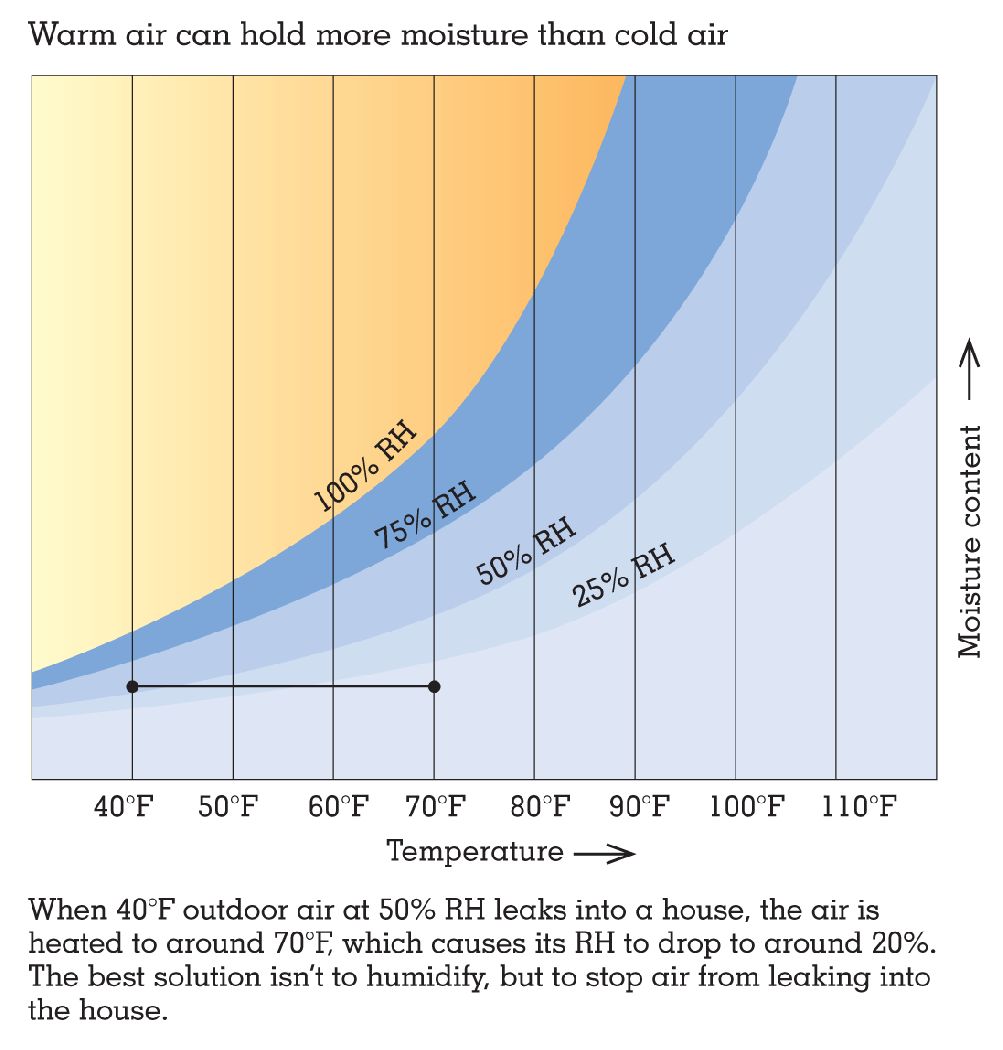
When Humid Air Is In Contact With A Cold Surface, It Can Create Moisture Or Condensation.
If Possible, Keep Indoor Humidity Below 60 Percent (Ideally Between 30 And 50 Percent) Relative Humidity.
Web Important Strategy For Reducing Mold Growth.
Related Post: